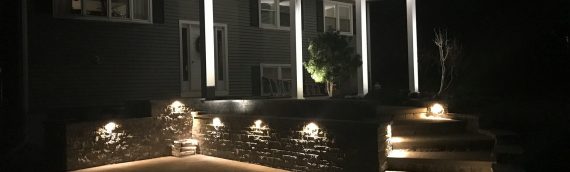
When planning your outdoor lighting design, one of the first things you’ll need to do is decide between solar vs. low voltage landscape lighting. Both options can enhance your landscape’s safety, beauty, and functionality, but each comes with its own set of advantages and limitations. Understanding the differences between these two systems will help you choose the best fit for your property, goals, and budget.
What Is the Difference Between Solar and Low Voltage Lighting?
The key difference between solar vs. low voltage landscape lighting lies in how they’re powered.
Solar landscape lighting is powered by the sun. Each fixture contains a small solar panel that absorbs sunlight during the day and converts it into electricity stored in a battery, which powers the light after dark. These systems are self-contained and require no wiring.
Low voltage landscape lighting is connected to your home’s electrical system through a transformer that reduces standard voltage to a safer, more energy-efficient level (typically 12 volts). These lights are wired underground or along surfaces and can be controlled by a timer, switch, or smart home system.
Solar Landscape Lighting
Solar lighting is an increasingly popular option for homeowners looking for a low-maintenance and eco-friendly way to light up their outdoor spaces.
What Are the Advantages of Solar Lighting?
- Easy Installation: Since there’s no wiring involved, solar lights can be installed quickly without the need for professional help or digging trenches.
- Energy Efficient: Powered entirely by sunlight, solar lights reduce your home’s electricity usage and are environmentally friendly.
- Low Maintenance: Once installed, solar lights require minimal upkeep. There are no bulbs to change or wires to check.
- Flexible Placement: With no cords to manage, solar lights can be moved easily to adjust your lighting layout.
What Are the Disadvantages of Solar Lighting?
- Dependent on Sunlight: Solar lights require several hours of direct sunlight per day to charge fully. In shady areas or during cloudy seasons, performance may be limited.
- Less Brightness: Solar lights may not offer the same level of brightness or coverage as wired systems.
- Shorter Lifespan: Batteries in solar lights degrade over time, often needing replacement every 1-2 years.
- Limited Control: Most solar lights turn on automatically at dusk and off at dawn, offering little customization unless you purchase higher-end smart models.
Low Voltage Landscape Lighting
When comparing solar vs. low voltage landscape lighting, it’s key to note low voltage systems are the standard in professional landscape lighting due to their reliability, flexibility, and superior brightness.
What Are the Advantages of Low Voltage Lighting?
- Bright, Reliable Illumination: Low voltage lights are typically brighter and more consistent than solar alternatives.
- Customizable Layouts: With a transformer and wiring, you can create a tailored lighting design with multiple zones and control options.
- Durability: These systems are built to last, with weather-resistant components and long bulb lifespans.
- Advanced Control Options: With timers, dimmers, motion sensors, and smart integration, low voltage systems offer precise control over your lighting.
What Are the Disadvantages of Low Voltage Lighting?
- Professional Installation Recommended: Installing low voltage lighting often requires trenching, electrical knowledge, and careful planning.
- Higher Upfront Cost: Between fixtures, wiring, a transformer, and labor, initial costs can be significantly higher than with solar systems.
- Maintenance Requirements: Though durable, wired systems may occasionally require troubleshooting, bulb replacements, or wire repairs over time.
Comparing Costs: Solar vs. Low Voltage Landscape Lighting
When evaluating cost, it’s important to consider both upfront investment and long-term value. Solar fixtures range from $20–$50 for standard models. Installation costs are minimal since no wiring is required. Add ongoing costs for battery replacements. In contrast, a professionally installed low-voltage lighting system can cost anywhere from $500 to $3,000 or more, depending on project size, fixture quality, and complexity.
Work with Triad Associates’ Outdoor Lighting Experts
Choosing between solar vs. low voltage landscape lighting doesn’t have to be a challenge. At Triad Associates in Haverhill, MA, we specialize in creating custom outdoor lighting plans that enhance your home’s beauty, security, and functionality. Whether you’re leaning toward the simplicity of solar or the power and flexibility of low voltage lighting, our team will help you find the best option for your space, budget, and style. Contact us today to get started.