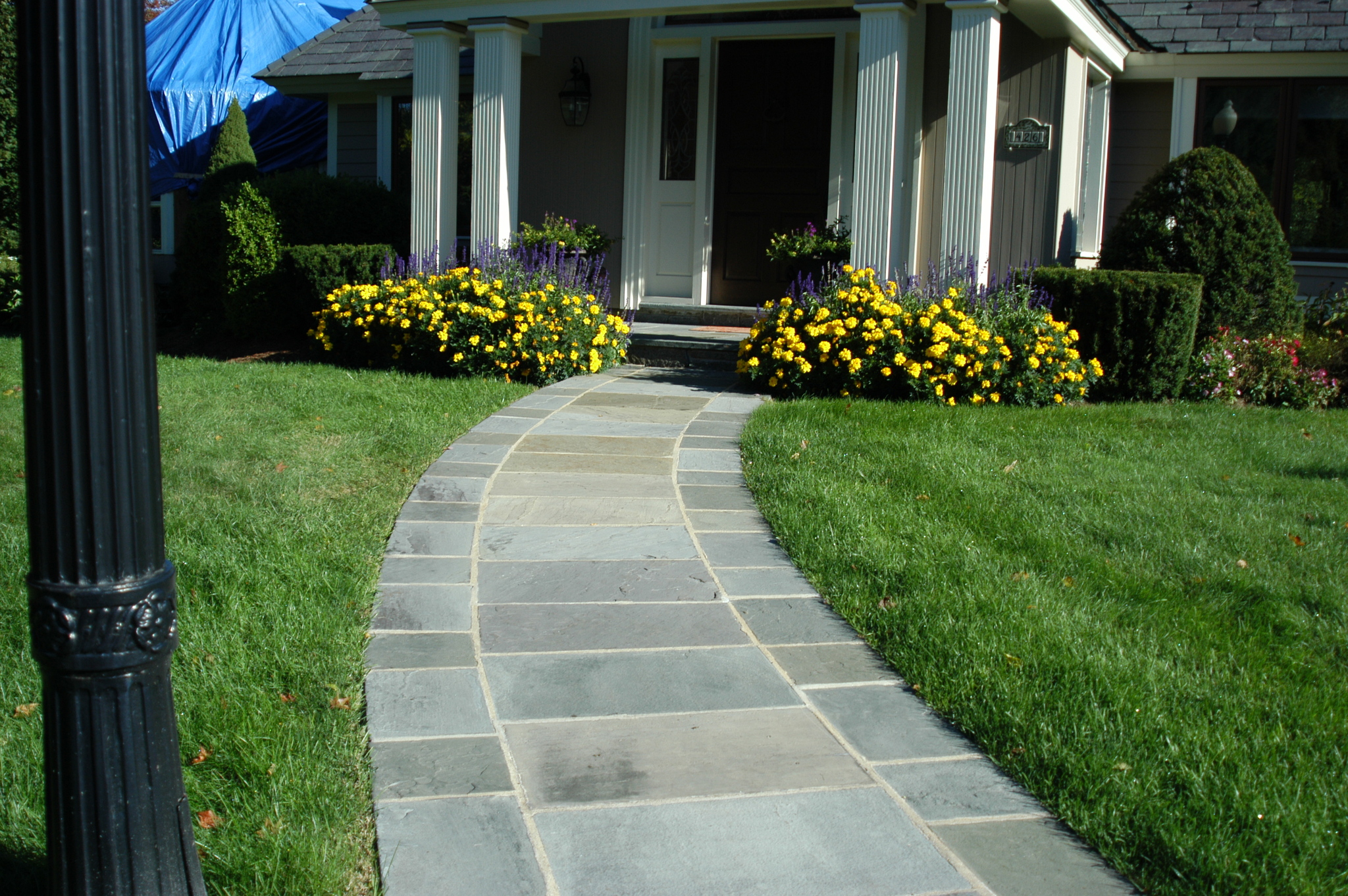
A well-designed walkway does more than connect one space to another. Professionally planned hardscaping walkways guide visitors, enhances curb appeal, and improves the functionality of your outdoor living areas. Whether leading to your front door, garden, or backyard patio, thoughtful planning and material selection are key to creating a walkway that is both durable and visually appealing. The hardscaping experts at Triad Associates can design and install a gorgeous walkway that will enhance your property and give you great results for decades.
Planning Your Walkway Project
Before selecting materials or breaking ground, it’s important to define the purpose and layout of your walkway within your overall hardscaping walkways plan. Proper planning ensures that the finished result complements your home’s architecture and withstands daily use.
What’s the Difference Between a Walkway and a Pathway?
Although the terms are often used interchangeably, there is a subtle difference. Walkways are typically more structured, direct routes designed for regular foot traffic, such as leading from a driveway to a front entrance. Pathways tend to be more decorative or informal, often winding through gardens or landscape features. Understanding the intended function helps guide material choices and design decisions.
Determining Walkway Dimensions and Traffic Flow
The width of your walkway should reflect how it will be used. For example, a front entry walkway is often at least 4 feet wide to comfortably accommodate two people walking side by side. Garden paths may be narrower, typically 2 to 3 feet wide, depending on usage.
Consider natural traffic patterns around your home. Walkways should feel intuitive and convenient, not forced or awkwardly placed.
What Is the Cheapest Type of Walkway?
Gravel and loose stone are generally among the most budget-friendly options. These materials require minimal excavation and can be installed relatively quickly. However, they may require more maintenance over time to prevent shifting or spreading.
Concrete can also be cost-effective, especially for straight, simple designs.
What Is the Easiest Walkway to Install?
For DIY-friendly projects, gravel walkways are often the easiest to install because they involve less precise leveling and no curing time. However, modular pavers are also relatively straightforward to install with proper base preparation, offering a more polished and long-lasting result. For the professionals at Triad Associates, all types of walkways are easily installed with expertise and precision.
Selecting Hardscape Materials
Material selection plays a major role in the appearance, durability, and maintenance requirements of your walkway. Choosing the right materials for hardscaping walkways balances aesthetics with functionality and long-term performance.
Comparing Paver Options for Durability and Aesthetics
Concrete and brick pavers are popular for residential walkways due to their versatility and durability. They come in various colors, shapes, and textures, allowing for custom patterns that complement your home’s exterior. Pavers are also easy to repair. Individual pieces can be replaced without disturbing the entire walkway.
Evaluating Gravel and Loose Stone Materials
Gravel and crushed stone provide a natural look and excellent drainage. These materials are cost-effective and quick to install but may shift under heavy foot traffic. Installing proper edging helps maintain clean lines and containment.
Considering Flagstone and Natural Stone
Flagstone and natural stone offer a timeless, organic appearance. Each piece has unique color variations and textures, creating a high-end aesthetic. While visually appealing, natural stone installations require careful placement and a stable base to ensure longevity.
Exploring Concrete and Stamped Concrete Solutions
Concrete provides a clean, modern look and can be customized with textures, finishes, and stamped patterns that mimic brick or stone. Stamped concrete allows homeowners to achieve decorative designs while maintaining the strength and durability of poured concrete.
Proper installation and expansion joints are essential to prevent cracking, especially in climates with seasonal temperature changes.
Designing for Function and Safety
A walkway should feel natural to use and safe in every season. Proper grading ensures that water drains away from your home rather than pooling on the surface. Gentle slopes are easier to navigate and reduce slip hazards, especially during wet or icy conditions.
Texture also matters. Slightly textured pavers, brushed concrete, or natural stone with grip provide better traction than overly smooth surfaces. Lighting is another important feature. Low-voltage pathway lights or integrated step lighting improve visibility and enhance safety at night.
Finally, consider transitions. Smooth connections between driveways, steps, and patios help prevent tripping hazards and create a seamless flow throughout your outdoor space.
Enhancing Curb Appeal and Architecture
A well-designed walkway should complement your home’s architectural style. Clean lines and neutral pavers often pair well with modern homes, while brick or natural stone may better suit traditional or colonial designs.
Color coordination is equally important. Matching or contrasting tones with your home’s exterior, trim, or existing hardscapes creates a cohesive look. Border accents, decorative patterns, or subtle curves can add character without overwhelming the design.
A thoughtfully planned walkway not only improves function; it enhances the first impression of your home.
Installation Best Practices
Even the best materials used in hardscaping walkways can fail if installed incorrectly. Proper excavation and a compacted gravel base are essential to prevent settling and shifting over time.
Best practices include:
- Excavating to the appropriate depth
- Installing and compacting a stable base layer
- Using edge restraints to maintain clean lines
- Ensuring proper drainage and slope
- Allowing adequate curing time for concrete surfaces
Professional installation helps ensure that your walkway performs well under foot traffic and withstands seasonal weather changes.
Maintenance and Longevity
Routine maintenance protects your investment and extends the life of your walkway. Regular maintenance tasks include:
- Sweep debris regularly to prevent staining and buildup
- Replenish joint sand in paver installations as needed
- Reseal pavers or stamped concrete periodically
- Address minor settling or shifting early before it worsens
- Avoid harsh de-icing chemicals that can damage surfaces
With proper care, a professionally installed walkway can provide decades of reliable performance and visual appeal.
Work With Triad Associates’ Walkway Experts
A successful hardscaping walkways project combines thoughtful design, quality materials, and expert installation. Whether you’re envisioning a welcoming front entrance, a garden path, or a connection between outdoor living areas, professional guidance ensures lasting results.
Triad Associates in Haverhill, MA, brings experience, craftsmanship, and attention to detail to every residential hardscaping project. From planning and material selection to precise installation, their team helps homeowners create walkways that are both functional and visually striking. If you’re ready to enhance your property with a professionally designed walkway, Triad Associates’ experts are ready to help. Contact us today.